Work
The Elder Scrolls: Arena
The Elder Scrolls: Arena is a single-player role-playing video game developed…
The Elder Scrolls: Arena is a single-player role-playing video game developed by Bethesda Softworks in March 25, 1994. Arena is the first installment action/adventure RPG fantasy video game series, taking place during the ten years of the Imperial Simulacrum of the Third Era.
Arena was one of the largest games created at the time of its release, if not the largest. In 2004, a downloadable version of the game was made available free of charge as part of the 10th anniversary of The Elder Scrolls series, but newer computers past Windows XP require an emulator, such as DOSBox, to run Arena, as it's an MS-DOS-based program.
Arena takes place on the continent of Tamriel, complete with wilderness, dungeons, cities and villages in a 6 million square mile play-space for the player, simulating the experience of a full continent.
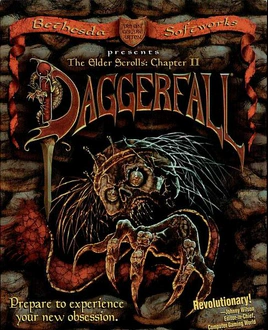
Although not as popular as the later games, Arena generated a cult following and was successful enough to spawn a popular sequel, Daggerfall.
Development
Arena was originally supposed to be a game of gladiatorial combat, hence its name. The player was to take their team of gladiators, and would travel about a fantasy world fighting other teams in their arenas until the player became "grand champion" in the world's capital.

Along the way, side-quests and various role-playing aspects were added. Eventually, these side-quests became more important than the tournament aspects, so the tournament part of the game was discarded, and Arena became a "full-blown RPG."
It sold slowly, but steadily, and despite harsh reviews, general bugginess, and the considerable demands the game made on players' machines, the game became a cult hit.
Because all the material had already been printed up with the title "Arena," the game went to market as The Elder Scrolls: Arena. The name turned into being a nickname for the world of Tamriel, since the Empire of Tamriel was so violent.
Missing their Christmas 1993 deadline, the game was released in the "doldrums" of March 1994, which was considered a bad time to release a game for a small developer like Bethesda. The misleading packaging further contributed to distributor distaste for the game, leading to an initial distribution of only 3,000 units.
When the game launched it was initially very buggy, being very difficult if not impossible to complete the main quest in the original, non-patched version of the game. Bethesda released a number of patches to fix almost all of the glitches, making the game finish-able and more stable.
Original Edition (1994)
Arena was originally released on CD-ROM and 3.5" floppy disk. The CD-ROM edition is the more advanced, featuring voice acting for various important characters, and an enhanced CGI-video ending. This version came with the Arena Manual, a "Codex Scientia" details and order page, and a Reference Card with install guide and calendar
Deluxe Edition (1994)
In late 1994, Arena was re-released in a special "Deluxe Edition" package, containing the CD-ROM patched to the latest version, the Arena Manual, a mouse pad with the map of Tamriel printed on it, an updated Reference Card with updated install guides, tips, a calendar, a Problem & Resolution section, and the "Codex Scientia"; an in-depth hint book.
See Deluxe Edition Gallery below for mentioned media.
Freeware Edition (2004)
The 3.5" floppy disk edition was released as freeware by Bethesda Softworks in 2004, on the official Elder Scrolls website for Arena.
Arena had gotten a re-release on September 10th, 2013 in a collection with the other four games in the main series. It is the exact version as the original, yet unlike the downloadable free version, bypasses the DOS menu entirely. This version was eventually deprecated in 2022, when Bethesda re-released Arena on Valve's Steam, and updated it to the Deluxe Edition.
Gameplay
The actual game-world is substantially larger than Morrowind, Oblivion, and Skyrim together. The game utilizes randomly generated content to generate a massive world, without much effort on the developers' part. A consequence of the random generation is that outside of the 17 designed dungeons, areas are reset on exit. Therefore, it is not possible to 'clear' these dungeons as they will infinitely respawn enemies. It also means that unlike games from Morrowind onward, any loot dropped inside the location will vanish on exit, making carrying capacity even more important than in later games.
The world has hundreds of towns made with actual design, rather than being random, containing businesses with random names (examples being "Gold Sword", "Silver Gauntlet", etc.) As well as several hundred dungeons, along with 17 specially designed dungeons that are part of the game's main quest.
Due to the enormity of the world, fast travel is essential. Walking to a nearby town could take up to 10 hours of real time, while a far off town in another province could take several days.
The game is played from a first-person perspective. Combat is performed by clicking the right mouse button and dragging it across the screen, as if swinging your weapon. Magic is used by clicking on the magic menu, selecting your spell, and clicking where you want to shoot it. There is also the ability to pickpocket people on the street, or break into a store at night.
Arena was one of the first games to have a day and night cycle, with stores closing at night, people getting off the streets, and monsters (Orcs, Lizard Men, etc.) wandering around towns at night.
The actual main quest is completed by finishing all 17 developer-made dungeons and completing the Staff of Chaos, but there are other quests as well. Asking about rumors in a town will lead to someone telling you about someone in a bar that may need help. These "miscellaneous" quests are very simple, ranging from simple delivery missions to finding an artifact item after going through a dungeon.
Another notable fact about Arena is that it has a tendency to be unforgiving towards newer players. It is easy to die in the starting dungeon, as powerful enemies can be encountered if the player lingers too long. However, this effect slowly withers away as the player becomes more powerful and more aware of the threats that loom everywhere. Even Ken Rolston, lead designer of Morrowind, says he started the game at least twenty times and only got out of the beginning dungeon once.
Introduction
"For centuries different factions battled in petty wars and border conflicts, until in 2E 896 Tiber Septim crushed all those who opposed him and took control, proclaiming himself as Emperor. Still, the bitter years of war had its affect on the populace. The name Tamriel, Elvish for 'Dawn's Beauty', seldom fell from anguished lips and was soon forgotten. In a place where life and death were different sides of the same coin tossed every day, the people of the known world began calling the land of their sorrow, the Arena... Now, 492 years after TIber Septim took control and kept the peace, the land of Arena has a new threat. The Emperor, Uriel Septim VII celebrates his forty-third birthday. But jealous hearts desire the throne and plot his downfall. It is said that hope flies on death's wings. Prepare then, for as the Elder Scrolls foretold, it will be here that your adventure begins... Uriel Septim IV, Emperor of Tamriel, stands with Talin, leader of the Imperial Guards. They have been summoned by Jagar Tharn, Imperial Battle Mage of the Empire, on rumors of treachery... The Emperor is betrayed... And transported to a dimension of Tharn's choosing... After months of preparation Jagar Tharn, takes the throne... Ria Silmane, once Tharn's apprentice, is captured before she can warn the Elder Council of the Imperial Battle Mage's treachery... Manipulating the essence of magic, Tharn prepares to take the true Emperor's place as ruler of the known land... The Imperial Wizard wastes no time in gathering his servants... And turning them into twisted counterparts of the Emperor's Guard..."
Plot summary
It is said that hope flies on death's wings. Prepare then, for as the Elder Scrolls foretold, it will be here your adventure begins...
Imperial Battlemage Jagar Tharn summoned both Emperor Uriel Septim VII and General Talin Warhaft on rumors of treachery. But Jagar Tharn betrays the two, and teleports them into another dimension. Tharn's apprentice, Ria Silmane, witnesses his treachery and tries to warn the Elder Council, but is killed by Tharn, her corporeal form being destroyed by the Staff of Chaos. Jagar Tharn transforms himself into the image of the Emperor and takes the throne, shapeshifting demonic minions into the Emperor's Guard, and sends a low-ranking member of the Emperor's court, the player's character and later the "Eternal Champion," into the Imperial Dungeons to die. Ria Silmane becomes incorporeal through the use of magic, and remains in Tamriel so that she can warn the prisoner that the Emperor is actually Tharn in disguise.
Ria creates a cell key to aid in the escape, and teleports the prisoner to another province through the use of a Shift Gate. The only way to stop Tharn is to obtain the Staff of Chaos, and use its magical energies, but the Staff has been split by by into eight pieces, and scattered across the continent. Being the only one Ria can trust, the prisoner must travel to Tamriel's most dangerous dungeons and mazes to recover all eight Staff pieces.
Finally, in 3E 399, after a long quest to reassemble the pieces, the Staff of Chaos is reassembled. However, Tharn was not defeated as hoped; in an attempt at becoming immortal, he drained the Staff of its power and combined it with his lifeforce within an artifact named the Jewel of Fire. The prisoner fought their way through the Imperial Palace to the dungeons, and engaged in a cataclysmic battle. The prisoner united the Staff with the Jewel, melting Tharn, and creating a portal to the dimension in which the Emperor and General Warhaft were being held. They fall out of the portal, and Talin becomes Tamriel's Eternal Champion as a reward for saving them.
Quests
• Main Quest
• Side Quest
World
• Map
• Locations
• Creatures
• Citizens
Character Information
• Attributes
• Races
• Classes
Gameplay Information
• Magic
• Artifacts
• Combat
• Glitches
• Items
• Spells
Damage
• Damage
• Diseases
• Curses
• Potions
Electronic Games
Electronic Games Volume 2, Issue 7 (May, 1994); Page 96 (link to article page on Archive):
- Tharn. Fighting through the sewers was easy; now Talin needs to choose a profession and train to become adept enough to challenge and defeat Tharn and his demon guards in the Imperial Arena. No problem. Piece of cake. nine provinces. Each province has eight city-states, eight towns, and 16 villages. Within and without each walled village are hundreds of real inns, shops, temples, houses, crypts, towers, and other locations that can be entered and explored. Each area has non-player characters (NPC) that can send Talin, the one-player character of the game, on quests, or who can buy, repair, create, and sell artifacts and spells. Every NPC in the game has a profession, a name, and limited knowledge of his surroundings and of Talin. spells available in the mage guild. Each Staff of Chaos piece, special map piece, and special artifact has its own uniquely diabolical master dungeon that must be searched for the needed item. Talin's first-person perspective displays a real-time, three-dimensional world with weather, moving celestial bodies, animated characters, and dithered horizons. Light sourcing technology produces shadows and brightness on the textured surfaces of buildings, walls, and skies. The phenomenal, highly detailed, clear graphics and animation retain perspective when jumping or levitating, and are only marred by the inability to join the rectangular surfaces to each other seamlessly. The beautifully rendered and animated lightning, rain, snow, and fog effects are only surpassed by the beauty of a simple sunrise or sunset. Combat is in real-time. Time freezes while the player selects items to use and spells to cast from pick lists. Swing melee weapons through any arc or screen positions to which a mouse can point. Resting on raised platforms in the dungeons turns off the infinite monster generators, allowing undisturbed rest, but later in the game resting becomes more difficult. Monsters increase in proficiency as Talin does, keeping up the level of challenge, but also creating improbably high-level encounters in areas which are relatively safe in other games, such as in towns. The excellent mouse interface is marred by the disappointingly incomplete and badly designed keyboard controls. Unfortunately, the excellent automapping system, which allows you to note locations on the town map and automatically travel to destinations on the province map, can only be used in one of the four types of map systems. Nobles, innkeepers, and others can offer Talin seven types of quests. The most unusual and satisfying capture quest requires Talin to engage a brigand in combat in his lair, where he surrenders as he nears death. sequel, where the vast land can be even more thoroughly filled with detail. B (Al Giovetti) BEHIND THE SCREENS VJ Lakshman: spellsword character back four paces and killing him. The shock of the sound sent the tester flying out of his seat, giving him quite a long and unexpected scare. We laughed for a long time about the two casualties of that encounter in the testing room confines.”
QuestBusters
QuestBusters Issue 111 (Late May (as in mid-June), 1994); Pages 3 & 5 (link to article page on Archive):
- It's rough to go on record saying that any one game is the best in a genre, or even better than another game in that genre. No game is perfect, and the imperfections in a product may make all the difference in the world to someone who hates a game as opposed to the one who loves it. Arena is by no means perfect. In fact, there have been a number of patches, so the first thing you should do is call Bethesda after buying the game to make sure you have the absolute latest version. But buy it you must, if you're a true role-playing fan. Prior to the release of Arena, Betrayal at Krondor was the biggest, most involving and exciting RPG available. Arena's designer VJ Lakshman looked at all the other RPGs out there before tackling what would be Bethesda's first such game. The result of his research is a game that surpasses even Krondor in size, depth, variety, interface and visual effects. Arena is truly the finest RPG on the shelves as we speak. Bethesda themselves or perhaps SSI, Origin or another company, may use Arena as a launch pad for the next generation of RPGs, but for now Arena will get the honors as the leader in the market. The goal is to find the eight pieces of the Staff of Chaos, which bad guy Jagar Tharn used to imprison the Emperor in another dimension. Discovering each piece of a staff may be a subquest in many RPGs, but that same discovery in Arena takes the same amount of effort as an entire RPG. And there are eight pieces out there in the vast world of Tamriel. The number of quests, subquests, subplots and story elements is so large that it might take a couple of weeks to clear a path through the part of the game that culminates with the discovery of the first piece of the Staff. You can ignore the quests entirely and just enjoy wandering through the world. It's so large and has so many locations that you could spend weeks “living” in Tamriel without doing anything that satisfies the quests or goals. Arena's interface is very simple to control and contains all the information you might want about your character on a couple of stat screens. There are many character classes, each of which can finish the game. You can pick one of them, or answer a number of morality questions a la Ultima to determine the class that suits you best. Once you choose a class, you are deposited in a jail dungeon that serves as a place to boost your character's level and familiarize yourself with the interface. The game is played entirely from a first-person perspective in a 3-D view that combines the detail of the Ultima Underworld and Eye of the Beholder series with the outdoor view and open terrain of Krondor. You can move around the game by using the “smart” cursor much like the one in the Underworld games. As you move the arrow closer to an edge of the screen, you go faster. Hit the right button to jump while moving. Turning around is a smooth motion too. Next to a character portrait at the bottom of the screen, several icons access various game functions. These are: attack, cast, steal, use, status, log, camp and automap. The log icon brings up a log of details of up to sixteen quests you have accepted. This is especially useful, because it eliminates most notetaking. The automap is as versatile as you could want. You can scroll the map, center it on your location or even jot notes on it. Unique magic
The spells in Arena are quite unique. You can be given known spells based on your character class, or discover them on scrolls – but you can also design your own spells. The Spellmaker lets you assign spell effects to a spell name, and automatically calculates how many spell points required to cast it. You can then save the spell to your spell book, and thus make your own collection of spells if you don't like the standard ones. Just be careful and make sure that you don't design the spells so powerful that you can't cast them. Arena requires a mouse for play, although some functions may be accessed via keyboard. Movement is more fluid with a mouse, as are most game functions. You can click on the character portrait to bring up stat screens that define your character's abilities, ratings, equipment and spells (if you have any). These screens are complete, and the information is laid out logically. Arena is so player-friendly and well thought-out that even the character portrait has a background color that indicates the character's condition (well, poisoned, diseased, etc.). There are too many interface details to go into here, but it suffices to say that both experienced RPG fans and newcomers alike will be able to play Arena after a quick perusal of the interface sections of the manual or the data card. Rain and snow
The game world really comes to life through the graphics and sounds. Arena's visuals are so good that you can see raindrops and snow in the air, puddles on the ground, moons in the distant sky and the many weather and terrain effects. The graphics act as if they represented a real world too. If you throw a fireball down a hall, you see the illumination of the hall as the ball flies. While most RPGs are limited to dungeon views, Arena also offers realistic outdoor scenery. Sound effects and music cover a wide range and further emphasize the atmosphere. I do have a couple of warnings about Arena, and one complaint. On quests, waste no time getting to places at specific times. Travel is costly, so you may box yourself into a corner and find that it impossible to satisfy a quest. Save your game right before you solicit quests. The game works in real time, so don't think you possess the luxury of exploration if you have a scheduled meeting. My complaint is with the game's detail level. If you set it too high, the game slows down far too much, even on my eight-meg machine. Conclusions:
Besides the points I just mentioned, you will find Arena an entertaining and enjoyable RPG. There is so much to experience, that each game will be vastly different. Bethesda really surprised a lot of players and critics with this title because they had never released an RPG before. Their first attempt was valiant, so don't miss out! by Russ Ceccola Difficulty: Intermediate
Company: Bethesda Softworks
Price: $59.95
Type: Role-playing
System: IBM Required 386/25+, DOS 5.0+, 4 MB RAM (2 MB EMS), 30 MB hard disk space, 100% Microsoft mouse-compatible, VGA Supports Aria, Ensonique, Roland MT-32 and LAPC, SoundBlaster, Ultrasound Recommended: 386/33+ and Sound card
ComClub
ComClub May, 1994; Page 31–32 (link to article page on Archive). The article was originally in Finnish: Article - Finnish (Original):
- Bethesda aikoinaan peliä kehitellessään oli uhonnut Originin Richard Garriotille että he kehittävät Ultimate roolipelin, paremman kuin Ultimat ja Ultima Underworldit, mihin Garriot oli toivottanut hyvää onnea ja heittänyt parilla neuvollakin. Itse suhtauduin väitteeseen “hieman” skeptisesti, varsinkin ottaen huomioon Bethesdan surkean 3D enginen (siis se iki-ihana Terminator: Rampagessa nähty “nykiti-nyks” huippukoodi). Kammoksuen zoomailin pelin takakantta jossa kummitteli inha, uskomattoman epätosi teksti: “486 33Mhz+ really cooks”. Arena sijoittuu Tamrielin maailmaan, joka on semmoinen keskitason tyypillinen fantasiamaailma. Sinänsä pelissä on erikoisuutena se, että se todellakin sisältää koko planeetan, jossa voi liikkua kaikissa kaupungeissa ja kylissä, ja peli sisältää myös ulkoilma-alueita kaupunkien ympäriltä. Ulkoilma-alueet on jaettu provinsseihin, joissa jokaisessa asuu erirotuisia ihmisiä/olentoja. Pelaajarotuihin kuuluu erilaisia ihmisiä, kolme eri haltijaa, ja yksi kissa-, että liskokansa. Jokaisella rodulla on omat hyvät ja huonot puolensa, ja manuaali kannattaa lukea tarkkaan hahmonluonnissa – esimerkiksi haltijat ovat aika aneemisia barbaareja, kun taas Hammerfellin provinssissa asustelevat redguardit eivät pääse oikeuksiinsa taikureina. Hahmoluokkia on mukavasti eli kahdeksantoista, ja mukana on ihan piristäviä poikkeuksia kuten salamurhaaja, jousiampuja, ja iso kasa velhon alaluokkia. Mutta missä on turisti á la Nethack? Pelin tavoitteena on löytää kaaoksen sauvan kahdeksan palasta, jolla voi vapauttaa toiseen ulottuvuuteen vangitun keisarin. Paha velho Jagar Tharn on vanginnut hänet sinne, ja ottanut itse keisarin paikan. Peli alkaa keisarillisen palatsin viemäreistä, joista pelaajan pitää paeta, ja aloittaa sauvan palasten etsiminen. Kun itse peli alkaa, käyvät kammottavimmat epäilykset toteen: Arena käyttää samaa 3D rutiinia kuin Rampagekin. Nykiminen on aivan hirveää isoilla detaljeilla, minimeillä minunkin surkea 486/33:ni jaksoi pyörittää peliä jotenkuten. Positiivinen puoli tässä on että detaljien pudottaminen ei vaikuta grafiikan tasoon mitenkään, vaan siihen kuinka kaukaa rakennukset ilmestyvät näkyviin. Luolissa kun on aina pimeää, eikä kauas näe, niin luolien grafiikka ei muutu mihinkään detaljien laskemisella. Kaupungeissa asia onkin toisin: jostain syystä katon pudottaminen pois nopeuttaa laskennan moninkertaiseksi, ja peli suorastaan kiitää, välillä hieman liikaakin (ihmiset liikkuvat arviolta kolme kertaa nopeammin kuin oikeasti). Kaupungeissa ja kylissä elämä on toteutettu osin loistavasti, ja osin päin buttista. Ajan kulku on kuvattu hienosti, taivas muuttuu erinäköiseksi ja varjot pitenevät pikkuhiljaa yön saapuessa. Yöllä kaupungissa liikkuminen on painajaismaista, kun tummat hahmot yhtäkkiä nousevat esiin pimeydestä, ja paljastuvat patsaiksi tai pieniksi rakennuksiksi. Päivänaikojen lisäksi pelissä vaihtuvat myös vuodenajat, eli talvet ja kesät kummittelevat mukana, luoden peliin ajankulun tunteen. Talvella sataa lunta, kesällä paistaa aurinko. Pelissä on ehkä kaikkien aikojen siistein usvaefekti, usva leijuu ilmassa kiehkuroina, mikä on todella upean näköistä. Haukkumishommiksi taas menee kaupunkien asukkaiden toteutus: kaikki kävelevät ympäriinsä ilman mitään tarkoitusta, ja näyttävät epäilyttävästi samanlaisilta. Kaikki kauppiaat ovat juuri samannäköisiä, samoin kuten asesepät ja kevytkenkäiset naiset. Todellisuuden illuusio murskautuu aika mukavasti kun planeetan toisella puolella törmää samaan vähäpukeiseen neitiin kuin 1000 mailia etelämpänä, varsinkin kun kyseinen neiti on pukeutunut samoihin erittäin vähäisiin vaatteisiin lumisateisella talvisäällä kuin kaukana eteläisessä ja aurinkoisessa maassa. Vaikka peli onkin hidas, eikä grafiikka yllä esim. Underworldien saatika sitten Doomin tasolle, ja vaikka peli on täynnä tietokoneroolipelien lapsuksia & bugeja jotka tuhoavat todentunnun erittäin tehokkaasti, ja vaikka suurimman osan ajasta peliä pelatessa haukuin sen lukemattomia virheitä oikein olantakaa, on se siltikin vanha kunnon tietokoneroolipeli, ja kummasti mielenkiinto säilyy vieläkin, vaikka en tiedä miksi! Ehkä se johtuu siitä että pelissä on todellinen, toimiva sääntöjärjestelmä, ja hahmoa voi kehittää eri suuntiin haluamansa mukaan, vaikkakin hahmoluokan puitteissa. Taikaesineet ovat hienoja, ja taikajärjestelmä on erinomainen. Pelissä on kasa vakiotaikoja, jotka vaihtelevat näistä normaaleista pula-ajan loitsuista tosijykeviin mäjäytyksiin (100 pointsia tuhoa/taikurin kokemusaste kun normaalit hipot esim. minun 10 asteen ritarillani ovat 140!) Suurin osa taioista on kylläkin epäsuoran ovelia, eivätkä suinkaan pelkkää tulta ja tappuraa. Pelissä voi myös luoda itse taikoja yhdistelemällä efektejä, ja taialle saa antaa nimen ihan itse (The Mighty Awful Shudderingly Shattering Destructive Wave of Omnipotent power of HIS Greatness Sir Pajarius, The One of...blaa blaa). Toinen tunnelmaan vaikuttava tekijä on pelin äänipuoli. Monet perusblasteria ja pikkukaiuttimia käyttävät eivät varmaankaan hahmota minkälaisia mahdollisuuksia tarjoaa halvinkin GMidi-kortti vahvistimen ja hyvien kaiuttimien kautta yhdistettynä. Bethesdalla on ainakin musiikkipuolella erittäin hommansa osaavaa porukkaa. Pelin musiikki on yhtä hyvää kuin Rampagessakin, eli aivan käsittämättömän siistiä. Ääniefektit ovat myös onnistuneita, tosin synkronisointi toiminnan kanssa on mennyt hieman pieleen. Yksin yöllä pelatessa tuli helposti hermostunut olotila ja piti käydä laittamassa valot päälle, niin kammottavia ja selkäpiitä hyytäviä pelin hirviöiden päästelemät äänet ovat. Jopa Doom jää toiseksi! Hirviöt pelissä ovat kovia, mutta tyhmiä kuin armeijan nahkasaappaat. Helppo keino lahdata vastustajat on saada ne törmäämään kulmaan, jolloin monsteri-parka juuttuu. Jos taas yrittää suoraa lähestymistapaa jotain Trollia tai Iron Golemia vastaan, voi Sir P:lle sanoa heihei... vaikka AC on -17 ja ase tekee tuhoa 2-16 +13 (mithril longsword) - paitsi tietenkin, jos vahingossa käyttää jotain crystal of shielding - nimistä taikaesinettä, tai jotain muuta tusinoista erittäin hyödyllisistä esineistä, joita pelissä on lukemattomia (manuaalin mukaan 2000). Konehuone on hermojen ohella se, jota Arena rasittaa pahiten. Pelaamisesta ei kannata uneksiakaan 386:lla, ja 4 megaiset koneet raksuttavat kovalevyä yhtenään, luonnollisesti pysäyttäen pelin toiminnan siksi aikaa. Hyvä keino pelin nopeuttamiseen on laittaa lisää muistia ja antaa Smartdrv:n hoidella loput 2MB:n voimalla - lataustauot tippuvat noin kymmeneen prosenttiin. Pelin laajuudesta saa hyvän kuvan sillä, että siinä ei ole ollenkaan alkudemoa, grafiikka on vain keskinkertaista, mutta siltikin peli vie kovalevytilaa 21 megaa. Peli luonnollisesti vaatii VGA näytön ja hiiren, äänikortti on hyvä olla. Elder Scrolls: Arena on buginen, ajatusvirheitä täynnä, liian laaja jotta voisi olla yksityiskohtainen, ja siltikin mahtava pelikokemus. Pelin vahvin puoli on äänien luoma tunnelma ja klaustrofobiset luolastot, Doomin läpipelannut veteraanikin (allekrj) tahtoi hyytyä välillä. Niin ja peli sisältää kunnollisen roolipelisääntösysteemin, eli kyseessä ei ole mikään “rooliseikkailu” tai roolipelimäinen toimintapeli, vaan kunnon täysiverinen tietokoneroolipeli, jonka hakkaa vain Ultima Underworldit ja aidot roolipelit. Kokonaisuutena ristiriitainen, mutta kuitenkin plussan puolelle nouseva pelikokemus. T. Pajari Elder Scrolls: Arena Testattu: 486DX/33, 8 MB, VGA, SB16 & Waveblaster, hiiri Grafiikka: 4- Äänet: 5 Pelattavuus: 3+ Mielenkiinto: 4+ Kokonaisuus: 4 329,-
- Page 12:
Elder Scrolls: The Arena on ensimmäinen osa Bethesdan kolmiulotteisesta roolipelistä ja peli on kohtuullisen hyvin tehty. Toivottavasti peliä kuitenkin parannellaan vielä jonkin verran ennen kuin seuraava osa saapuu markkinoille – silloin voisi kyseessä olla jo hittipeli.
The following is a rough translation in English:
- When Bethesda was developing the game, they had once threatened Origin's Richard Garriot that they would develop an Ultimate role-playing game, better than the Ultimas and Ultima Underworlds, to which Garriot had wished him good luck and even thrown in a few pieces of advice. I myself was “a little” skeptical of the claim, especially considering Bethesda's lousy 3D engine (hence the ever-wonderful “nykiti-nyks” top code seen in Terminator: Rampage). I zoomed in on the back cover of the game with a creepy, incredibly false text: “486 33Mhz+ really cooks”. Arena is set in the world of Tamriel, which is a typical mid-level fantasy world. The game itself is special in that it actually contains the entire planet, where you can move around all the cities and villages, and the game also includes outdoor areas around the cities. The outdoor areas are divided into provinces, each inhabited by different races of people/creatures. The player races include different people, three different elves, and one cat and lizard race. Each race has its own pros and cons, and it's worth reading the manual carefully when creating a character - for example, the elves are pretty anemic barbarians, while the redguards living in the Hammerfell province don't really get their due as magicians. There are a nice eighteen character classes, and there are some refreshing exceptions like the assassin, the archer, and a big bunch of wizard subclasses. But where's the tourist á la Nethack? The goal of the game is to find the eight pieces of the chaos staff, which can be used to free the emperor who has been imprisoned in another dimension. The evil wizard Jagar Tharn has imprisoned him there, and has taken the place of the emperor himself. The game begins in the sewers of the imperial palace, from which the player must escape, and begin searching for the pieces of the staff. When the game itself begins, the most terrible suspicions are confirmed: Arena uses the same 3D routine as Rampage. The stuttering is absolutely terrible at high details, at minimum even my poor 486/33 managed to run the game somehow. The positive side here is that lowering the details does not affect the level of graphics in any way, but only how far away the buildings appear. Since it is always dark in caves, and you can't see far, the graphics of the caves do not change at all by lowering the details. In cities, the situation is different: for some reason, dropping the roof speeds up the calculation many times, and the game simply flies, sometimes a little too much (people move about three times faster than they actually do). Life in cities and villages is partly brilliantly realized, and partly a bit of a bummer. The passage of time is depicted nicely, the sky changes color and shadows gradually lengthen as night falls. Moving around the city at night is nightmarish, when dark figures suddenly emerge from the darkness, and are revealed as statues or small buildings. In addition to the daytime, the game also changes seasons, meaning winters and summers haunt it, creating a sense of time passing in the game. It snows in winter, the sun shines in summer. The game has perhaps the coolest fog effect ever, the fog floats in the air in swirls, which is truly stunning. The implementation of the city residents is a bit of a bummer: everyone walks around aimlessly, and looks suspiciously similar. All the merchants look exactly the same, as do the gunsmiths and women in light shoes. The illusion of reality is shattered quite nicely when you bump into the same scantily clad young lady on the other side of the planet as you do 1,000 miles to the south, especially when that young lady is wearing the same very scantily clad clothes in snowy winter weather as she is in a far southern and sunny country. Even though the game is slow, and the graphics aren't up to the level of, say, Underworld, let alone Doom, and even though the game is full of RPG quirks & bugs that destroy the authenticity very effectively, and even though I spent most of the time playing the game complaining about its countless errors, it's still a good old RPG, and strangely enough, it still retains its interest, although I don't know why! Maybe it's because the game has a real, working rule system, and you can develop your character in different directions as you want, although within the character class. The magic items are great, and the magic system is excellent. The game has a bunch of standard spells, which vary from these normal time-of-deficit spells to really powerful attacks (100 points of destruction/magician's experience level when the normal hipots for example on my 10th level knight are 140!) Most of the spells are indirectly cunning, and by no means just fire and killing. You can also create your own spells in the game by combining effects, and you can give the spell a name of your own (The Mighty Awful Shudderingly Shattering Destructive Wave of Omnipotent power of HIS Greatness Sir Pajarius, The One of...blah blah blah). Another factor that affects the atmosphere is the game's sound. Many people who use basic blasters and small speakers probably don't realize what kind of possibilities even the cheapest GMidi card offers when combined with an amplifier and good speakers. Bethesda has a very competent team at least when it comes to music. The game's music is as good as in Rampage, which is to say, it's unbelievably cool. The sound effects are also successful, although the synchronization with the action has gone a bit wrong. When playing alone at night, I easily got nervous and had to turn on the lights, the sounds made by the monsters in the game are so creepy and spine-chilling. Even Doom comes second! The monsters in the game are tough, but stupid like army leather boots. An easy way to kill your opponents is to make them run into a corner, which will get the poor monster stuck. If you try to make a direct approach against a Troll or Iron Golem, you can say hey to Sir P... even though the AC is -17 and the weapon does 2-16 +13 damage (mithril longsword) - unless of course you accidentally use a magic item called crystal of shielding, or one of the dozens of very useful items that the game has countless (according to the manual, 2000). The computer room is the thing that strains Arena the most, besides your nerves. You shouldn't even dream of playing on a 386, and 4 megabyte machines constantly crackle the hard drive, naturally stopping the game in the meantime. A good way to speed up the game is to add more memory and let Smartdrv handle the rest with 2MB - loading pauses drop to about ten percent. The game's scope is well-illustrated by the fact that there is no initial demo at all, the graphics are only mediocre, but the game still takes up 21 megabytes of hard drive space. Naturally, the game requires a VGA monitor and mouse, and a sound card is a good idea. Elder Scrolls: Arena is buggy, full of errors, too large to be detailed, and still a great gaming experience. The game's strongest point is the atmosphere created by the sounds and the claustrophobic dungeons, even a veteran who played through Doom (allekrj) wanted to freeze at times. Oh, and the game includes a proper role-playing game rule system, meaning it's not some "role-playing adventure" or role-playing action game, but a proper, full-blooded computer role-playing game, beaten only by Ultima Underworld and real role-playing games. Overall, a contradictory, but nevertheless positive gaming experience. T. Pajari Elder Scrolls: Arena Tested: 486DX/33, 8 MB, VGA, SB16 & Waveblaster, mouse Graphics: 4- Sounds: 5 Playability: 3+ Interest: 4+ Overall: 4 329,-
- Page 12:
Elder Scrolls: The Arena is the first part of Bethesda's three-dimensional role-playing game and the game is reasonably well made. Hopefully, the game will be improved somewhat before the next part hits the market - then it could already be a hit game.
Pelit
Pelit March, 1994; Page 40-41 (link to article page on Archive). This article was also originally written in Finnish: Article - Finnish (Original):
- Varsinainen juoni on ihailtavan lyhyt: hovimaagi Jagar Tharn kaappaa vallan lähettämällä kuningas Uriel Septim IV:n toiseen ulottuvaisuuteen. Ainoa tapa pelastaa kuningas on koota kahdeksaan osaan pilkottu Kaaoksen sauva. Arena on virtuaaliroolipeli, mutta niille, jotka haaveilevat uudesta Ultima Underworldista, minulla on sanottavana vain kolme sanaa: Legends of Valour. Arena nimittäin tuo jatkuvasti mieleen tämän onnettoman roolipelin irvikuvan, onneksi sentään valovuosia parempana versiona, mutta kuitenkin perusidealtaan häkellyttävän samanlaisena. Perusidea on siis luoda virtuaalimaailma, jossa kantavan pääjuonen lisäksi voi halutessaan elää, tehdä töitä ja roolipelata haluamaansa hahmoa. Tällainen peli-idea vaatii tavattoman monipuolisen maailman, jottei se tipu mekaanisiin kaavoihin, ja vaikka Arena on valtavan laaja, on se yhtä ohutkin. Käytännössä peli rajoittuu sauvankappaleiden metsästyksen lisäksi satunnaisiin näppärien, raskaamman luokan taikaesineiden etsimiseen. Hoo, minä olen musta haltia
Arenan hahmovalikoima ei ole mitenkään omaperäinen, vaan tarjoaa hiukan eri nimillä kaikki kymmenistä muista peleistä tutut hahmoluokat. Arena tarjoaa myös samat kliseiset rajoitukset aseissa ja haarniskoissa kuin 90 prosenttia muistakin peleistä. Ei osaa varas pukeutua muuhun kuin nahkaan, ei pysy puhtaan maagin kädessä miekka. Onneksi luokkia on kuitenkin sen verran runsaasti, että hyvä kompromissi kyllä löytyy. Mukavasti hahmon saavuttaessa kokemusta pelaaja saa itse päättää mitä ominaisuuksia kohottaa. Lyhytnäköisyyttä edustaa se, että päästäkseen inventaarioonsa pelaaja joutuu aina kulkemaan statistiikan kautta, vaikka inventaariota tarvitsee huomattavasti useammin. Anteeksi, mutta missä…
Juuri kaupungeissa liikkuminen tuo Legends of Valourin niin elävästi mieleen. Joka kaupungissa on lukuisia kapakoita, temppeleitä ja kauppoja. Katuja mittailevien asukkaiden kanssa voi keskustella kysymällä nimeä, paikkojen sijainta sekä tiedustelemalla huhuja niin töistä kuin yleisistä asioistakin. Työt ovat tylsiä “saata sukulainen temppeliin/nouda jotain jostain” -tyyppisiä vähän rahaa tuottavia läpihuutohommia. Kapakoissa käydään nukkumassa, kaupoissa myymässä turha roju pois sekä korjauttamassa joskus joku parempi ase, temppelissä parantamassa se, mihin oma kyky ei riitä ja maagien killassa ostetaan juomia, loitsuja sekä tunnistutetaan taikaesineet. Mielenkiintoista on se, että kaupungeista voi poistua eikä maaseutu ihan heti lopukaan. Ilmeisesti koko 12 miljoonaa neliökilometriä on tarkkaan kartoitettu. Sauvan paloja ei voi noutaa, ennen kuin joku kertoo niiden sijainnin. Tämä joku yleensä haluaa ensin noudettavaksi jotain muuta. Sama kaava on sivutehtävissäkin: nouda ensin kartta, sitten itse esine. Provinssi, josta sauvan palan löytää, ilmoitetaan unessa, joten joku päämäärä on aina. Virvon varvon tuoreeks terveeks
Magia toimii valitsemalla loitsuvalikosta haluttu taika, joka sitten vähentää taikapisteitä, eli ei mitään uutta magiarintamalla. Taikoja on kyllä aika monipuolinen määrä, ja seiniä tuhoava loitsu on hyvä keksintö. Magian alueellakin Arenalle kajahtaa yksi papukaijamerkki. Arenassa on nimittäin mahdollisuus valmistaa ihkaomia loitsuja (jos vain rahat riittävät), ja editori on hyvin monipuolinen, sallien jopa kolmen efektin liittämisen loitsuun. Vähäpätöisemmät ja käyttökelvottomat loitsut voi myös deletoida loitsukirjastaan. Itseasiassa olen tullut mainiosti toimeen melko pienellä loitsimisella, taistelutaikoja en ole käyttänyt oikeastaan lainkaan, koska miekanheiluttelulla pärjää hyvin. Muutama loitsu on kuitenkin niin käytännöllinen, että kannattaa harkita kaksi kertaa ennen kuin valitsee puhtaan soturin. Tosin Conan Barbaarillakaan ei ole vaikeuksia löytää miljoona tonnia taikaesineitä, joilla omaehtoisen taikomisen puutetta voi korvata. Alle maan peuhaamaan
Luolastoissa on yksi paha puute: niiden autius. Siinä, missä Underworldien luolastot ovat eletyn näköisiä, Arenan vankiluolista löytyy vain geneerisiä aarre/tavarapinoja, teleporttaavia hirviöitä ja ainoat puzzlet ovat tekstimuotoisia arvoituksia, nekin harvinaisia. Pääosin pelaaminen on siis hack'n'slashia ja sokkeloisten luolastojen koluamista. Automaattikartta onneksi on, ja koska se toimii ikään kuin hahmolla olisi tutka päässään, komppaaminen helpottuu paljon. Arenan positiivisiin puoliin kuuluu sen näppärä aseenheiluttelu. Oikea hiirenappulaa pohjassa pitämällä sankari huitoo siten miten hiiri liikahtaa, mikä on luontevan tuntuista ja peittoaa jopa Underworldin taistelun. Valitettavasti hirviöt seisovat taistelussa paikoillaan, kunnes kuolevat (tai minä kuolen), mikä ei ole hirveän vakuuttavaa, ja muutenkin ne ovat tekoälyltään vajaita. Typerästi hirviöt kuuluvat tyhjästä ilmestyvään lajiin, jopa suoraan niskaan. Juonen kannalta oleellisissa luolastoissa tuntuisi osa hirviöistä olevan kiinteitä, eli samat hirviöt samassa paikassa. Elossapysymistä vaikeutta lisäksi se, ettei sankarin anneta vapaasti nukkua. Uupuneen sankarin anoessa menulta leirilupaa se kylmästi ilmoittaa “You cannot rest. Enemies are near”, vaikka ne olisivat seinän takana tai jotain. Eihän se ole pelin asia päättää milloin sankari saa levätä. Jos pelaaja niin haluaa, hänellä pitäisi olla oikeus nukahtaa vaikka keskelle meduusalaumaa. Jos/kun terveelliset nokkaunet saa otettua, katkeavat ne varsin pian kiitos tyhjästä ilmestyvien hirviöiden, mikä sai alussa pelaamisen tuntumaan sanoisinko tuskaiselta. Elossapysymista kohentaa SHIELD-loitsu. Se kun pysyy aktiivisena, niin peli kulkee. Tarvittavan manan saa nukkumattakin, kiitos erään dokumentoimattoman ominaisuuden. Tähän tarvitaan taikaesine, jonka loitsu vaatii maalin. Loistun laukaisemisen asemasta se perutaankin oikealla hiirennappulalla, ja mana nousee. Isi, katso mitä piirsin
Graafisesti Arena on enemmän kuin lähellä Terminator: Rampagea, sattuneesta syystä. Eli tarjolla on suorakulmaisia käytäviä, onneksi usein jopa vaikka vedellä tai kuiluilla terästettynä. Arenassa on vaikuttavia lumisade-, sumu-, usva-, pimeys- sun muita efektejä, valoefektit myös ovat varsin näppäriä, mutta valitettavasti vastapainona on turhan paljon kymmenessä minuutissa DPaintilla väännettyjä amatöörimäisen näköisiä hirviöitä. Tehoa vaaditaan sen verran, että Arenaa tuskin kannattaa alle 486-sarjan pelata. Musiikki ei ole yhtään hassumpaa. Kappaleita on varsin paljon ja suurin osa ihan hyviä, etenkin General MIDI -korttini läpi ne eivät todellakaan kuulostaneet FM-synteesin parannetulla versioilta. Installointiohjelmassa on bugi: sekä musiikki että ääniefektit täytyy määritellä aina kumpikin, muuten toinen jää pois. Bugeista puheen ollen, ilmestyessään Arena oli niitä pullollaan. Suomeen tullut versio on 1.04, joka on jo hyvin toimiva. Niukasti uudempi 1.04a löytyy Pelit-BBS:stä, mahdollisesti myös työn alla oleva 1.05:kin. The Elder Scrolls: Arena ei ole lähelläkään virtuaaliroolipelien kirkkainta kärkeä, mutta en kyllä pysty sitä sudeksikaan haukkumaan, lieväksi yllätyksekseni. Runsaista vioistaan huolimatta Arena on ihan kohtalaisen rattoisa peli. Loppujen lopuksi. Nnirvi
Bethesda Softworks/U.S. Gold PC
Näyttö: VGA
Ääni: Sound Blaster (16, Pro), PAS16, GUS, Ensoniq, Aria, Roland (MT-32, LAPC-1, SCC-1), General Midi
Ohjaus: N, H
Kiintolevytila: 25 Mt
Muuta: vaatii 386/25, 4 Mt RAM
Testattu: 486/50, GM + SB Toteutus
Rumaa ja tehokasta grafiikkaa sekaisin, kiva musiikki, varsin hyvät efektit mutta kankea käyttöliittymä. Kynnys
Suorastaan toimintapeli. Yhteenveto
Suoraviivainen, mekaaninen, tyhjä, mutta jotenkin vetoava virtuaaliroolipeli. Virtuaaliroolipeli
80
- Page 2:
Arvostelut
DEMO
The Elder Scrolls: Arena.....40
Nnirvi. Bethesda/U.S. Gold haastaa Underworldin. Page 79:
English Summary
The Elder Scrolls: Arena
(Bethesda/U.S. Gold) Legends of Valour - The U.S. Version. Big is not always better. Has promise for a brighter future, though. Article Title picture:
Santorini on ehkä hiemann Melnibonen Elricin näköinen.
First page picture:
Vanhanaikaisen tuntuinen inventaario.
Provinsseihin ilmestyvät mielenkiintoiset luolastot vasta kun joku kertoo missä ne ovat.
Pian saa luukasa terästä.
Aarteet ja tavarat näytetään geneerisenä pinoina. Second page picture:
Örkit saivat kuonoonsa.
Ensimmäinen sauvanpala on minun!
The following is a rough translation in English:
- The actual plot is admirably short: court mage Jagar Tharn seizes power by sending King Uriel Septim IV to another dimension. The only way to save the king is to reassemble the eight-part Staff of Chaos. Arena is a virtual role-playing game, but for those who dream of a new Ultima Underworld, I have only three words to say: Legends of Valour. Arena constantly brings to mind a caricature of this unfortunate role-playing game, fortunately in a light-years better version, but still shockingly similar in its basic idea. The basic idea is to create a virtual world where, in addition to a main storyline, you can live, work and role-play any character you want. Such a game idea requires an extremely diverse world so that it doesn't fall into mechanical formulas, and although Arena is enormously vast, it is equally thin. In practice, the game is limited to hunting for wand fragments and occasionally searching for handy, heavier-class magic items. Hoo, I'm a black elf
Arena's character selection is not original at all, but offers all the character classes familiar from dozens of other games with slightly different names. Arena also offers the same clichéd restrictions on weapons and armor as 90 percent of other games. A thief can't wear anything but leather, and a pure mage can't hold a sword. Fortunately, there are so many classes that a good compromise can be found. Conveniently, as a character gains experience, the player can decide for himself which attributes to raise. The shortsightedness is represented by the fact that in order to access his inventory, the player always has to go through statistics, even though he needs the inventory much more often. Sorry, but where…
It's the cities that bring Legends of Valour to mind so vividly. Every city has numerous taverns, temples and shops. You can talk to the residents walking the streets by asking their names, locations and asking for rumors about jobs and general matters. The jobs are boring “get a relative to the temple/pick something up from somewhere” type jobs that generate little money. You go to taverns to sleep, in shops to sell off useless junk and sometimes have a better weapon repaired, in temples to improve what your own abilities are not good at, and in the mages' guild you buy potions, spells and identify magic items. What's interesting is that you can leave the cities and the countryside doesn't end right away. Apparently the entire 12 million square kilometers has been carefully mapped. You can't pick up the pieces of the wand until someone tells you where they are. This someone usually wants something else to pick up first. The same pattern is used in side quests: first pick up the map, then the item itself. The province where you find the piece of the staff is revealed in a dream, so there is always some goal. To the fresh health of Virvon Varvon
Magic works by selecting the desired spell from the spell menu, which then reduces magic points, so nothing new on the magic front. There is a fairly diverse number of spells, and the spell that destroys walls is a good invention. In the area of magic, one parrot sign also echoes Arena. In Arena, you have the opportunity to craft your own spells (if you have enough money), and the editor is very versatile, allowing you to attach up to three effects to a spell. Less effective and unusable spells can also be deleted from your spellbook. In fact, I have managed quite well with quite a bit of spellcasting, I haven't really used combat magic at all, because I can do well with sword swinging. However, a few spells are so practical that you should think twice before choosing a pure warrior. Although even Conan the Barbarian has no trouble finding a million tons of magic items to compensate for the lack of voluntary magic. Go underground
The dungeons have one major drawback: their desolation. While the dungeons of Underworlds look lived-in, the dungeons of Arena only have generic treasure/item piles, teleporting monsters, and the only puzzles are text-based riddles, even those are rare. So the gameplay is mainly hack'n'slash and exploring labyrinthine dungeons. Fortunately, there is an automatic map, and since it works as if the character had a radar in his head, navigating is much easier. Arena's positive aspects include its clever weapon swinging. Holding down the right mouse button will make the hero swing in the same direction as the mouse, which feels natural and even overshadows the combat in Underworld. Unfortunately, the monsters stand still in battle until they die (or I die), which isn't terribly convincing, and their AI is lacking anyway. Stupidly, monsters are a type of creature that appears out of nowhere, even right in the neck. In dungeons that are important to the plot, some of the monsters seem to be fixed, i.e. the same monsters in the same place. Another difficulty in surviving is that the hero is not allowed to sleep freely. When an exhausted hero asks for permission to camp from the menu, it coldly announces “You cannot rest. Enemies are near”, even if they are behind a wall or something. It is not the game's business to decide when the hero can rest. If the player wants to, he should have the right to fall asleep, even in the middle of a swarm of jellyfish. If/when healthy naps are taken, they are cut off quite soon thanks to monsters appearing out of nowhere, which made playing the game feel painful, I would say. Survival is improved by the SHIELD spell. When it remains active, the game runs. You can get the necessary mana even without sleeping, thanks to an undocumented feature. This requires a magic item whose spell requires a goal. Instead of firing a blast, it is canceled with the right mouse button, and mana increases. Dad, look what I drew
Graphically, Arena is more than close to Terminator: Rampage, for some reason. That is, there are rectangular corridors, fortunately often even reinforced with water or shafts. Arena has impressive snowfall, fog, mist, darkness and other effects, the lighting effects are also quite clever, but unfortunately the counterbalance is too many amateur-looking monsters distorted with DPaint in ten minutes. The power required is so much that Arena is hardly worth playing on anything less than the 486 series. The music is no worse. There are quite a lot of songs and most of them are quite good, especially through my General MIDI card they really didn't sound like improved versions of FM synthesis. There is a bug in the installation program: both music and sound effects must always be specified, otherwise the other one will be omitted. Speaking of bugs, Arena was full of them when it was released. The version that came to Finland is 1.04, which is already very functional. The slightly newer 1.04a can be found on Pelit-BBS, and possibly 1.05, which is also in the works. The Elder Scrolls: Arena is nowhere near the top of virtual role-playing games, but I can't call it a wolf, to my slight surprise. Despite its many bugs, Arena is a fairly fun game. After all. Nnirvi
Bethesda Softworks/U.S. Gold PC
Display: VGA
Sound: Sound Blaster (16, Pro), PAS16, GUS, Ensoniq, Aria, Roland (MT-32, LAPC-1, SCC-1), General Midi
Controls: N, H
Hard disk space: 25 MB
Other: requires 386/25, 4 MB RAM
Tested: 486/50, GM + SB Implementation
A mix of ugly and efficient graphics, nice music, pretty good effects but a stiff user interface. Threshold
A straight action game. Summary
A straightforward, mechanical, empty, but somehow appealing virtual role-playing game. Virtual role-playing game
80
- Page 2:
Reviews
DEMO
The Elder Scrolls: Arena.....40
Nnirvi. Bethesda/U.S. Gold challenges Underworld. Page 79:
English Summary
The Elder Scrolls: Arena
(Bethesda/U.S. Gold) Legends of Valour - The U.S. Version. Big is not always better. Has promise for a brighter future, though. Article Title picture:
Santorini might look a bit like Elric of Melnibone. First page picture:
An old-fashioned-looking inventory.
Interesting dungeons only appear in provinces when someone tells you where they are.
Soon you'll get a pile of bones made of steel.
Treasures and items are displayed as generic stacks. Second page picture:
The orcs got their snouts in.
The first piece of staff is mine!

General: Use DOSBox Staging instead
A 16-bit application, Arena requires the use of a DOS emulator to run on modern hardware. Archaically, when downloaded from Bethesda's website, the user was required to download the emulator themselves; currently, however, Arena is provided with a copy of DOSBox when downloaded from Steam.
Unfortunately, DOSBox's default settings inadequately emulate games without modification. For example: many graphical elements in Arena were drawn at 300x200 resolution; many games from the DOS era were meant to be "aspect corrected" to 4:3, around 640x480 on the display, and were not meant to be left in a "widescreen" format. Leaving the window uncorrected leads to many in-game character graphics becoming "squished" and leaving user interface sprites rendering inaccurately; as a side note, aspect correction is a requirement for taking Arena images on The Elder Scrolls Wiki. Another issue is abysmal performance when the game's "disintegration effect" plays on the interface due to DOSBox's inefficient renderer.
Among other issues, these problems can be resolved using DOSBox Staging, a fork of DOSBox oriented to running DOS games at optimal defaults; optimal enough to require minimal modifications for the application itself. DOSBox Staging can be accessed from its website, through the Portable .ZIP.
The original directory of Arena 's DOSBox implementation, should be deleted entirely, except for the text file. Steam can verify the local directory in case something goes wrong, and repair the game. DOSBox Staging should be extracted there instead; delete the contents of, and replace it with these tweaked defaults: [render]
[cpu] cpu_cycles = 30000
[autoexec] @echo off mount C: ..\ARENA mount D: ..\ARENA -t cdrom C: SET ARENADATA=C: D: ACD -Ssbpdig.adv -IOS220 -IRQS7 -DMAS1 -Mgenmidi.adv -IOM330 -IRQM2 -DMAM1 exit
When finished, Arena should launch with more optimal defaults. DOSBox Staging's executable is named, like the original, and Steam will launch the game like normal. Windowed mode will cover more of the screen, reaching an optimal 1:1.2 aspect ratio DOS games require, and fullscreen mode should operate at a better-scaled resolution. Other changes include automatic sound mixing to avoid wasting CPU power by mistakenly up or downsampling audio, other bugfixes not included in the original DOSBox source, and more customization options in the default configuration file for DOSBox Staging.
By default, DOSBox Staging uses an accurate CRT filter reproduction on the screen to closely emulate a proper analog image. This filter is recommended, and scales based on the user's resolution to be consistently accurate. If this filter is unwanted, in the above configuration, remove the hashtag "#" symbol before the and lines. This will restore a "regular" image, however, unexpected artifacts may occur when removing the blur the game's imagery was expected to perform under.
• 1) glshader = sharp
• 2) integer_scaling = vertical
• 1) ~486DX/2-66
• In DOSBox configuration, a hashtag "#" is a "comment" that is unregistered by the program.
• See for further bugfixes to.
• See for why the default cpu_cycles rate was increased to 30000 from "fixed 25000".
Game runs at inconsistent speeds
This issue, which is also known as "tes arena runs too fast" or "tes arena runs too slow," is a symptom of Arena 's unstable design. There is a "logical cap" to the game's performance, which won't increase after a certain point, but many animations and engine functions are tied to the game's "cycle" rate; how many instructions the CPU can process from the engine quickly. This also increases difficulty, as enemies' attacks are dictated by their animation speed. At the fastest speeds, enemies will kill the user in seconds.
According to the box design, Arena was designed for, at minimum, an Intel i386/25 MHz CPU. However, due to the recommended CPU being an Intel i386/33 MHz, or the Intel i486/33+ MHz as a CPU that "really cooks!" the game was likely designed for and tested on those more. DOSBox Staging can emulate those CPUs effectively and is reflected through the parameter, though emulation isn't perfect, and the amount of "cycles" to emulate a CPU is estimated.
From lowest to highest in cycles:
As expected, using anywhere from 3000 - 7000 MHz is borderline unplayable by today's standards; the game plays abysmally slow, even on the lowest detail settings. To rectify this, it's recommended to use at least 12000 cycles and increase lightly until it becomes more comfortable to play. On the other hand, the user can immediately use the i486/66 MHz cycle rate, considered the "sweet spot" for performance. Arena will run the best at around 27000 to 30000 cycles.
At 30000 cycles, the game will consistently play at max detail with acceptable performance. Animations will be noticeably sped up, but the rate can be decreased if this is considered distracting. Lowering detail will only be required at large or NPC-heavy locations. In the game's configuration for DOSBox Staging: [cpu] cpu_cycles = 30000
It should be mentioned that Arena was meant to be a slowly played video game, and many developers during the DOS era could not predict the evolution of CPU performance. To counteract fast CPUs breaking the game, Bethesda implemented a command for Intel Pentium/i586 CPUs to slow the game down. However, with manual cycle control, this isn't necessary. Setting the command in DOSBox, or in DOSBox Staging to anywhere from 25000-30000 will be enough to play Arena properly.
It should be noted that the user should not use the "max" cycle rate. This is a common setting that comes from a misconception: maximum cycles run as fast as possible, therefore, the game runs as fast as it can, and therefore as it should. This is untrue, as the DOSBox Staging developers explain: "The reasoning here is that older games are often sensitive to CPU speed; they might run too fast or misbehave if the CPU is too performant, ... Newer, more demanding games, however, benefit from the extra speed advantage and can generally handle faster processors without negative side effects."
"DOSBox traditionally defaulted to 3000 cycles for real mode programs, and “max cycles” (as fast as your host CPU can go) for protected mode programs. 3000 cycles for real mode is a good middle-of-the-road setting that gets most games running (even if not optimally). The “max cycles” setting, on the other hand, is quite problematic for a couple of reasons:
As noted above, using "max" is old advice when CPUs could technically self-throttle their speed in DOSBox. Using the recommended speeds will optimally run Arena as intended.
• i386/25 MHz: around 3500
• i386/33 MHz: around 6000
• i486/33 MHz: around 12000
• On a related note, the i486/66 MHz, the 33 MHz's more powerful brother, will be around 25000 to 30000 cycles.
• 1) ~486DX/2-66
• "A significant number of games crash, misbehave, or manifest subtle bugs when the emulated CPU is “too fast”. In the early days of DOSBox, cycles = max was not a problem because the much slower host CPUs from 10-20 years ago acted as a “natural throttle” on the effective emulation speed. However, many of those old speed-sensitive games that used to work with cycles = max are now broken on today's fast CPUs.
• "The max setting is not transferable across setups as it depends on the host CPU's speed. Games configured for cycles = max might work fine on your particular machine, but they could break on your friend's faster computer or yours a few years later when you get your next CPU upgrade. The max N% cycles setting (e.g., max 70%) is plagued by the same problem.
• "cycles = max often causes audio glitches and drop-outs in games. It's best to use the lowest fixed cycles value that runs the game at an acceptable speed ...
• "Some DOS programs really freak out when the emulated CPU is being dynamically changed at runtime, which is what max tends to do."
DOSBox not closing after "Drop to DOS"
If installing the floppy disk/v1.06 release of Arena through Bethesda's installation PDF, or launching Arena through a .BAT file, the user may notice Arena doesn't close the DOS prompt when exiting the game. Instead, the DOS command line will display: ARENA V1.0[X] complete. C:\>_
The reasoning is that, by default, DOS and BAT files share control over the OS. Usually, when most users launch the game, their configuration section will look similar to: mount c .\games\tesarena c: cd arena arena.bat exit
In that example, the OS is giving control to to execute its commands, and expects it to exit out, which Bethesda never equipped to do. This is because dropping to the command line is expected behavior in DOS; for solely launching games in a DOS emulator, it is not. DOSBox then can't finish its command,, as it was never returned control.
To rectify this, using DOS' command on the BAT will return control to DOSBox when the program finishes, and exits as expected: mount c .\games\tesarena c: cd arena call arena.bat exit
Can't change audio settings on Steam
When launching and changing the music or sound settings with the Steam release of Arena, the settings will not change in-game. The Steam release is unfortunately hardcoded to use GeneralMIDI. The reason why is unknown; the publishers at Bethesda mandatorily selected specific GeneralMIDI drivers when launching the game. However, using Sound Blaster 16 or similar is supported. This behavior can be rectified.
When installed from Steam, a standard Arena from will look like: [autoexec] @echo off mount C: ..\ARENA mount D: ..\ARENA -t cdrom C: SET ARENADATA=C: D: ACD -Ssbpdig.adv -IOS220 -IRQS7 -DMAS1 -Mgenmidi.adv -IOM330 -IRQM2 -DMAM1 exit
Originally, for both v1.06 and v1.07 releases of Arena, the game's utility would directly modify with new audio driver settings. When launching the game via, these settings would be selected automatically. As seen above, with, this is no longer the case.
To rectify this, the can be modified to run the original as intended, and will reflect the user's changes when running: [autoexec] @echo off mount c ..\ARENA -t cdrom mount d ..\ARENA -freesize 1024 d: call arena exit
The game should now properly read the audio drivers as the installation utility selects them.
• already sets a system variable for Arena 's game data. Therefore, the C: and D: directories need to be swapped, with C: technically being the CD-ROM drive because D: is the " " directory.
• , to provide the directory with a non-null amount of space to write/read (DOSBox and DOSBox Staging by default will claim 0KB is available from the directory).
• , using the fix from .
• , to quit the game upon selecting "Drop to DOS."
Sources
Adapted from the original article, under CC BY-SA 3.0.