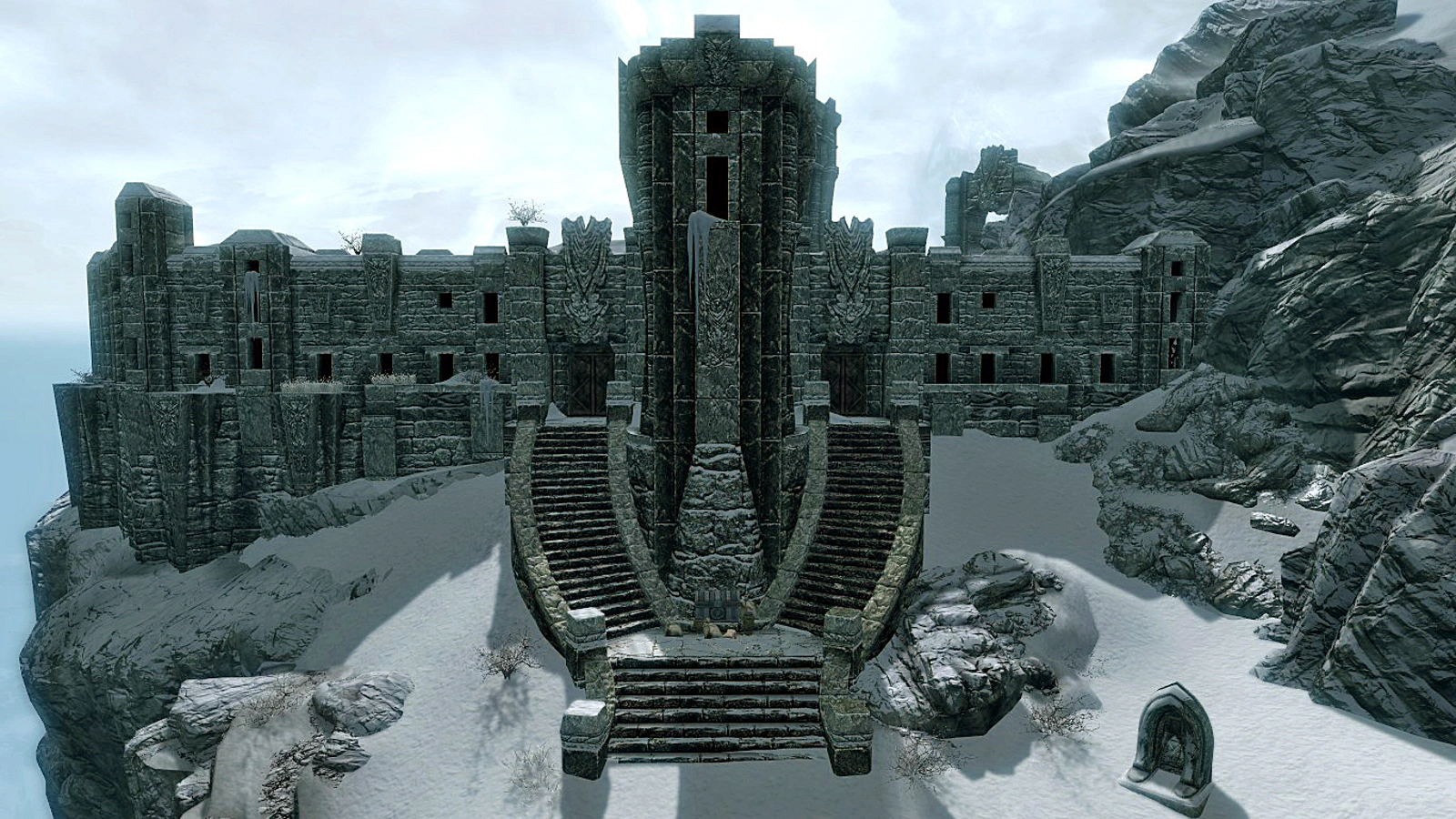
Person
Tiber Septim
Dragonborn, first Emperor of the Third Empire, and founder of the Septim Dynasty
Tiber Septim, named using the regnal titles Septim I, Tiber I, and Tiber Septim I, and also called Hjalti Early-Beard, General Talos Stormcrown, the Red King, the Warrior-King, and Ysmir, was a Dragonborn, first Emperor of the Third Empire, and founder of the Septim Dynasty. Tiber is regarded as one of Tamriel's most famous figures, having been the only one in history to unite the continent.
Starting with his service under the Cyrodilic emperor Cuhlecain, Tiber Septim fought under the name "General Talos" to unify Cyrodiil, eventually succeeding or usurping Cuchlecain and becoming emperor. After his unification of Tamriel, an effort that culminated in the birth of the Third Empire, he ended the lengthy Interregnum and began the Third Era. Tiber Septim gave his name to the lineage of Cyrodiil Emperors, the Septims. Upon his death, Tiber Septim apotheosized into Talos and became a deity in the pantheon of the Nine Divines.
Early life
Tiber Septim was born in 2E 828 on the 24th of Mid Year, which was celebrated as a holiday in Alcaire, which known as Tibedetha (or Tiber's Day). Accounts differ on Tiber Septim's biography. There are two commonly accepted theories, with the first usually taking precedence over the latter.
Orthodoxy

The most commonly accepted story within the Empire is that Tiber Septim was born in Atmora as Talos, meaning Stormcrown in Ehlnofex, hence Talos Stormcrown. He had a brother named Agnorith. He spends his early life in Skyrim among Nords, where he learns about the Thu'um from the Tongues. Talos later became a General of the Colovian Estates under King (and later Emperor) Cuhlecain. Talos also learned about the Colovian Estates and their chieftains, and at the age of twenty, he led the invasion of Old Hroldan. Talos met the combined army of Skyrim and High Rock, who were hostile to Cuhlecain, on the cliffs of a fort called Sancre Tor on which Tiber defeat the Nordic-Breton army. The Nordic army joined Talos when they saw him use the thu'um, that his blood is the blood of the Dragon and heir to the Empires of Men.
Cuhlecain and Talos marched east and the enemy's battlemages surrendered before their armies. In 2E 854, they conquered the Imperial City result in they gained the full control over Cyrodiil. In the same year, while days Cuhlecain was crowned as Emperor, a Breton nightblade managed to assassinate Cuhlecain and slit Talos's throat, burning the palace in the process. While Talos survived, he could no longer shout but instead leading his armies with a whisper. Talos had an affair with Barenziah of Morrowind, who became pregnant. Talos quickly had the unborn child aborted to prevent conflict with his legitimate heir.
Heresy
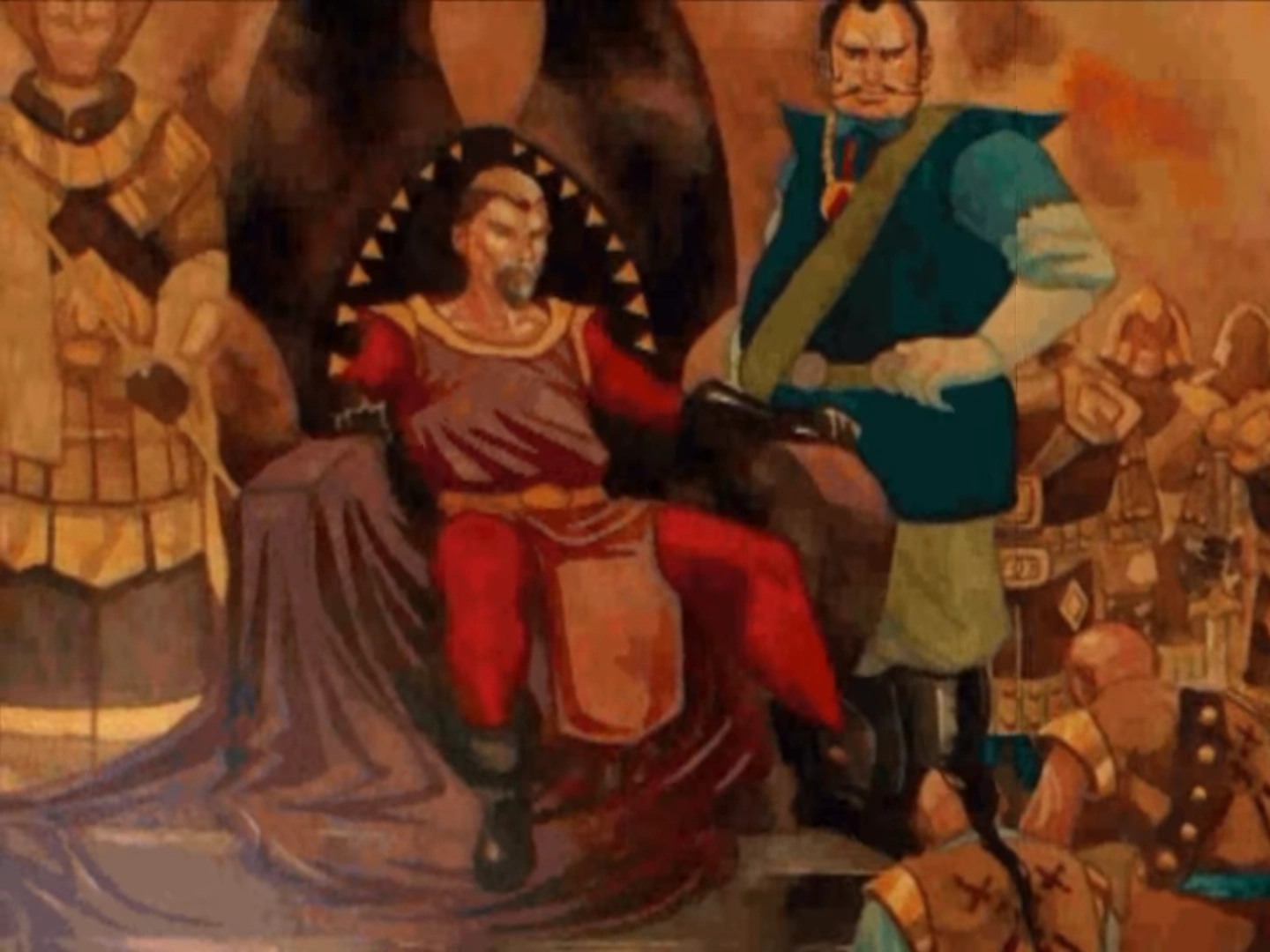
Tiber was born as Hjalti Early-Beard on the island of Alcaire, in High Rock where he learned to use a sword. The Nords and Bretons had been fighting for centuries at the northern border of Falkreath, a kingdom in the Colovian Estates. At the age of twenty, Hjalti led the forces of Skyrim against the Reachmen of High Rock. During those days he met Cuhlecain, the king of Falkreath, who came to secure his northern border. They soon became allies, result the King named Hjalti, general of the joined forces. While Hjalti was a shrewd tactician, his small band of Colovian troops and Nord berserkers broke the Reachmen's line, forcing them back beyond the gates of Old Hrol'dan. A siege seemed impossible, Hjalti could expect no reinforcements from Falkreath, and that night a storm came and visited Hjalti's camp. Hidden in the storm, Wulfharth, a long-dead Nordic king, spoke with him in his tent and taught him the Way of the Voice. By dawn of the morning, Hjalti went up to the gates, and the storm followed just above his head and where he shouted down the walls of Old Hrol'dan, and his men poured in. After their victory, the Nords called Hjalti "Talos", meaning "Stormcrown".
While Cuhlecain was intended to crown himself emperor, but Talos was still haunted by the prophecy given him by the Greybeards. Before Cuhlecain could be sworn as emperor, Talos secretly murdered him and the Imperial Palace burned to the ground in action, and Talos slit his own throat to take the suspicion off of him. While he order to hide his involvement in the assassination, a lie was made that Tiber's own throat was cut. Though he lived, Tiber's voice failed him. To prevent Cyrodiil from falling apart again, he approached Zurin Arctus, the Grand Battlemage, and crowned himself as Emperor of Cyrodiil. Following the assassination, Hjalti had enlisted the help of both Ysmir Wulfharth and Zurin Arctus to help administer the empire. Ysmir had consistently pushing for further invasions of Hammerfell and Morrowind, but Tiber resisted his urgings which resulted in Wulfharth ultimately left Tiber in disgust at his inaction.
A friend of Tiber, General Symmachus who become great in his own right, brought Barenziah to the Imperial City where they fell in love. Tiber and Barenziah engaged in an affair but it was soon discovered that Barenziah was pregnant, but soon that she was pregnant, Tiber determined that he could not allow such a threat to his son's dominion and so ordered a healer to force Barenziah to miscarry. Barenziah was dispatched from the Imperial City very soon after this.
Conquest and Reunition of Tamriel
The human realms eventually fell beneath the expanding Empire, including Hammerfell, whose conquest had been deemed a formidable challenge. When the commander of the New West Navy, Amiel Richton, was dispatched to Stros M'kai, the Battle of Stros M'kai commenced. During the fighting, Richton's assassin, Dram, loosed a poisoned arrow that struck down Prince A'Tor, ending his life and shattering the final resistance of the Crowns. Following the victory, Tiber Septim appointed Amiel Richton as provisional governor of the island.
With Hammerfell brought under Imperial control, Tiber turned his gaze toward Morrowind. After a series of short engagements and growing tension among the Great Houses, a treaty was forged, signed by either Tiber himself or Zurin Arctus. As part of the agreement, Vivec offered the Numidium to the Emperor in exchange for Morrowind retaining a measure of autonomy and self-governance.
Upon receiving the Numidium from the Tribunal, Tiber summoned Wulfharth to his court, acknowledging that the old Nord had spoken truly. Yet once Wulfharth returned, Tiber ordered him seized, and his soul was torn from his body to power the Mantella, the soul gem that served as the Numidium's heart. With the construct awakened, Tiber unleashed its might to bring the Summerset Isles under Imperial rule, completing the unification of Tamriel in 2E 896.
Dawn of the New Era and Death
After Tiber reunited Tamriel and established the Third Empire, he declared the beginning of the Third Era. At the dawn of his unified reign, Tiber acknowledged the dense jungles that encompassed Cyrodiil, and even was hated by his people, and thus declared that his Thu'um of his divine right and reshape the land. Around this time, Tiber Septim drew upon the vast wealth amassed through Imperial tithes, the lucrative ebony trade of Morrowind, and the heavy tolls levied upon the newly secured highways to rebuild and fortify both Cyrodiil and the Imperial City. Though the White-Gold Tower still stood, the capital had suffered greatly through the chaos and ruin of the Interregnum years.
Tiber ruled peacefully for the next 38 years, which were said to be just, pious, and peaceful time for everyone and from serf to sovereign, was known as the Golden Age. Sancre Tor was corrupted by an unknown evil, which Tiber sent four greatest Blade agents, Alain, Valdemar, Rielus, and Casnar to investigate what had befallen the sacred place. However, it turned out to be the work of Tiber's former Imperial Battlemage, Zurin Arctus (who now known as The Underking) who in an act of vengeance cursed the Blades with undeath to guard the ruin for all time. The Blades first Grandmaster subsequently sealed the ruins to prevent any other from falling to the Underking's powerful magic. Tiber died in 3E 38, and was succeeded by his grandson, Pelagius.
Race
Septim's no Cyrodiil from what I've heard, though he rules their remnants and rebuilds their Empire; he's something worse, or greater, depending on your disposition to the center sun. [...] For the last four hundred years the petty kings of Cyrodiil have been squabbling over the title of Emperor, all claiming forbearance -- Imperial throne's blood's thinner than a sea dream and half as wet.
The exact race of Tiber Septim is unknown, but what is known is that he was not a Mer or Beastfolk, but a subspecies of Men.
If the statement that he is from Alcaire is true, then he was most likely a Breton. It is said that Emperor Cephorus Septim II was the first Emperor of the Septim Dynasty to have been neither a Breton nor having spent any childhood in High Rock, which would mean that Tiber Septim could have been a Breton. According to Kier-jo, General Stormcrown was a Breton, not a Nord. Kyne also refers to him as a "manmer" in Michael Kirkbride's C0DA, and Bretons are both man and mer.
If the statement that he is from Atmora is true, then he was most likely an Atmoran or Nord. Some sources say that Septim was an Atmoran, but not a Nord. Heimskr says that Tiber Septim was a Nord.
Talos' avatar, Wulf, was an Imperial, and was stated to look like the figure on the Septim coins, which would imply that Tiber Septim might have been an Imperial.
Physical appearance
Tiber Septim was described by Queen Barenziah. He was of average height, half a head shorter than Symmachus, well-knit of figure and flexible of movement. He had a winning smile, bright blue eyes, and his hair was stark white, while his face was lined and weathered. Barenziah presumed his age ranged from forty to sixty years old at the time. Other features of Tiber Septim were a ruthless brow and powerful chin.
Godhood
After his death Tiber is believed by most to have ascended to godhood. He became Talos once more, revered as the God of War and Governance within the Imperial Pantheon. Upon his ascension, the Eight Divines became the Nine, and to the Nords, Talos was revered as the God of Might and Honor, for through a lifetime of conquest he had accomplished what none before him had, uniting Tamriel beneath a single banner.
During the Great War between the Empire and the Aldmeri Dominion however, peace was agreed upon with one of the conditions being that the Empire cease to recognize Talos as one of the Divines. After word got out that the Empire wasn't enforcing the Talos ban, the Thalmor had all shrines to him removed from the temples in towns loyal to the Empire. The Stormcloaks in the province of Skyrim reject the White-Gold Concordat that instates this law.
Conflicting reports
There are still conflicting reports about Tiber's life due to many aspects of his early reign being rewritten, and this is why there is such confusion over his origins. Brought up by Ysmir in The Arcturian Heresy:
• His birthplace is left as a matter of debate. Alcaire claims to be the birthplace of Tiber Septim, while various other sources suggest that he was born in Atmora.
• Tiber Septim begins to change in character and personality after his roaring conquests.
• It is left unclear why Tiber Septim betrayed his battlemage.
• It is unknown whether the Mantella is the heart of the battlemage, the heart of Ysmir, or the heart of Tiber Septim.
Totem of Tiber Septim
The Totem of Tiber Septim is an artifact that allows its bearer to control the golem Numidium, the ancient Dwemer construct. It was forged or created at the end of the Second Era by the Imperial Battlemage Zurin Arctus to allow Emperor Tiber Septim to use the golem in his conquest of Tamriel. However the Totem, along with the Numidium, was lost and the automaton was destroyed by the Underking. It was known to have resurfaced in the Iliac Bay region some time around 3E 401. After changing hands several times over the next few years, it was recovered by a a mysterious adventurer who was sent by Emperor Uriel Septim VII.

Armor of Tiber Septim
The Armor of Tiber Septim was a cuirass that once worn by Tiber during his reign as Emperor, and it was most notably worn by Tiber during his declaration of the end of the Second Era, and beginning of the Third Era. It was generally reserved exclusively for the Emperor. Before his death, Tiber give the armor to the Blades to honor their role in the Battle of Sancre Tor. However the Blades erected a shrine to Tiber in Sancre Tor, on the spot he received the blessing of Akatosh sometime after where the armor would remain there for many centuries. During the end of the Third Era and events of the Oblivion Crisis, the armor proved to be instrumental in ending the Crisis as the Hero of Kvatch plundered the artifact from Sancre Tor, and used his blood stains to satisfy the need for the "blood of the Divines" to open a portal to Mankar Camoran's Paradise.

Boots of the Apostle
The Boots of the Apostle are shrouded in mystery. The wearer is rumored to be granted the ability to levitate, though sightings of them in use have been extremely rare. The boots are considered relics of Tiber Septim and legendary treasures of Cyrodiil. When he descended from the mountains of High Hrothgar, Tiber Septim purportedly came down riding the clouds, striding through the air in the boots, which were gifted to him by the Greybeards for his cunning craft and riddling. The Nerevarine reportedly recovered the boots and sold them to the Mournhold Museum of Artifacts in 3E 427.
Hjalti's Sword
The Sword was the blade of Hjalti Early-Beard which he wielded in the sacking of Old Hrol'dan. In 4E 201, a restless spirit who fought alongside Hjalti during the battle mistook the Last Dragonborn for his old comrade. The spirit was unable to rest due to an unfulfilled promise Hjalti had made him to become his sworn brother after the battle. The Dragonborn retrieved the sword and presented it to the ghost, which finally allowed him to rest.
Old Man's Lucky Coin
As Wulf, his Imperial aspect, give the Nerevarine during his quest of defeating Dagoth Ur. However oddly, Sabrina Vitellia also has one of these coins which there are no other clues to suggest how she got it.
Sources
Adapted from the original article, under CC BY-SA 3.0.